

Cold Chain & Controlled Environments

Cold Chain Monitoring for Food, Pharmacy, and Life Sciences

Monitor temperature-sensitive storage, equipment, assets, and shipments with connected condition history and configured alerts.

Monitor Temperature-Sensitive Products and Environments

Monitor current conditions and review history across cold storage, pharmacy equipment, staging, and transportation. SNAPTAG configures sensing, connectivity, thresholds, and alerts around the selected application.

Temperature and humidity monitoring where required
Threshold and excursion alerts configured around the application
Condition history by equipment, storage area, asset, or shipment
Fixed-facility and supported in-transit connectivity
Sensor, battery, and connectivity status visibility
Monitoring and reporting workflows validated during the pilot
Refrigerated Warehouse Cold Storage Facility
Core Capabilities

Condition Monitoring Capabilities

Connect the conditions that matter with the equipment, location, asset, or shipment being monitored.

Temperature & Humidity Monitoring

Monitor temperature—and humidity where required—at selected equipment, storage locations, assets, or shipments.

Threshold & Excursion Alerts

Configure alert conditions around product, equipment, and operating requirements

Condition History

Review timestamped readings, excursions, and supported events across selected storage and transportation workflows

Equipment & Location Context

Connect readings to a refrigerator, freezer, incubator, storage area, shipment, or other monitored point

What a Cold Chain Pilot Should Validate

Establish the current process, validate monitoring performance, and review the resulting condition history before expanding.

Baseline

Current conditions

Record readings and the current monitoring process

Validate

Thresholds & alerts

Test excursion detection and notification workflows

Review

History & response

Evaluate records, escalation, and follow-up

Cold Chain Applications

Protect food, medicines, and controlled environments

Start with the product, equipment, environment, and operating requirements. Then configure the sensing and response workflow around what must remain protected.

Food and beverage cold-chain storage and transportation monitoring
Food & Beverage Cold Chain

Reduce preventable loss across storage and handling

Connect temperature, time, product movement, and response history across food-service and distribution workflows.

Temperature excursions in walk-ins, cold rooms, refrigerated trucks, or prep storage

Perishable inventory damaged by excessive dwell time outside controlled zones

Food-safety investigations delayed by incomplete condition, handoff, or response records

Manual HACCP and safety logs that are incomplete, late, or hard to audit

FEFO rotation misses that lead to unnecessary spoilage or shrink
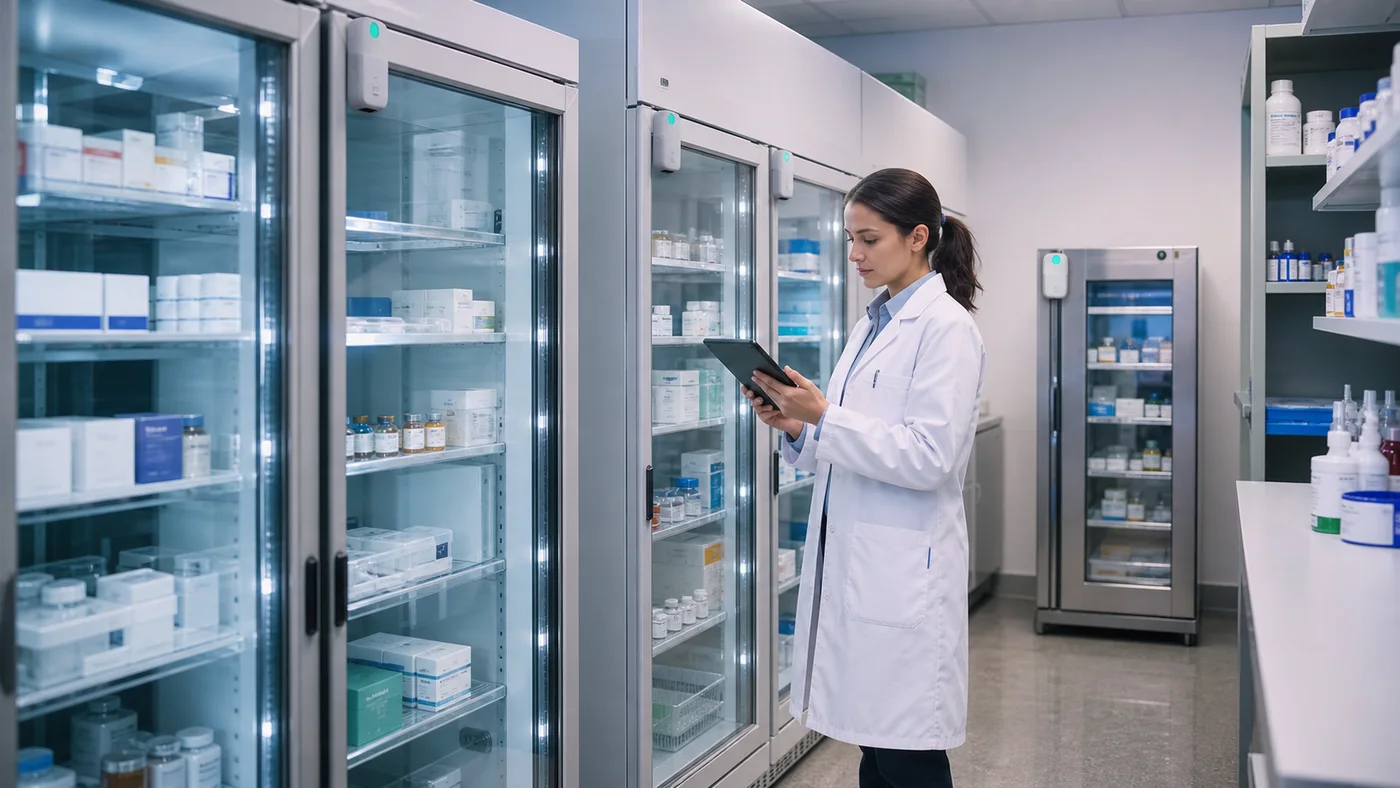
Pharmacist reviewing monitored pharmaceutical refrigerators and controlled storage equipment
Pharmacy & Pharmaceutical Cold-Chain Monitoring

Protect medicines and controlled storage environments

Monitor temperature—and humidity where required—across pharmacy refrigerators, freezers, incubators, medication rooms, and other controlled environments. Review current conditions, excursions, alerts, and history by equipment or location.

Equipment-level monitoring for refrigerators, freezers, and incubators where present

Temperature and humidity thresholds where required by the application

Excursion duration, notifications, and response workflows

Condition history for quality reviews and operating procedures

Sensor, battery, connectivity, and equipment-status context

Monitoring requirements, sensor selection, calibration, and documentation needs are confirmed during scoping. Vaccine or regulated applications may require specified monitoring devices and operating procedures.

Pilot Validation

Validate environmental monitoring before rollout

Start with selected equipment, storage areas, products, and operating conditions. Validate sensor placement, connectivity, thresholds, alerts, history, and response workflows before expanding.

Map the equipment, locations, products, and required conditions

Confirm sensor type, placement, accuracy, logging interval, and calibration needs

Validate facility coverage, connectivity, and data-gap handling

Configure thresholds, excursion duration, notifications, and response ownership

Review condition history, exports, and rollout requirements