
Temperature Monitoring for Refrigerated Food Delivery and Distribution
Commercial refrigerated distribution spans more than time on the road. Food may move from a cold room to staging, loading, a refrigerated vehicle, an intermediate handoff, and final receipt. Monitoring can make those transitions more visible, but it must be scoped around the measurement target, the operating procedure, and the connectivity available on the route.
Map the Full Delivery Path
Define where monitoring begins and ends for food distribution, meal kits, prepared-food delivery, catering, commissary operations, or refrigerated fleets. Identify storage, staging, loading, transportation, delivery, and receiving steps, then decide whether history should follow a shipment, container, tote, vehicle, or another selected asset.
- Assign a unique identity to the monitored item or carrier so readings and events remain attributable.
- Document responsibility at each handoff, including who reviews an exception and who records the response.
- Include loading delays and staging dwell; meaningful exposure can occur before departure or after arrival.
Measure the Right Condition
A sensor placed in a vehicle, insulated container, tote, or package measures the environment near that sensor. It does not automatically represent the internal temperature of every food item. Packaging, thermal mass, coolant, load arrangement, door activity, and placement can change what the sensor sees.
- Use an approved probe or product-temperature procedure when internal food temperature must be verified.
- Select placement and logging intervals for the intended decision, then test them with representative loads.
- Do not use one environmental reading alone to determine product safety or disposition.
Connect Facilities and Transportation Appropriately
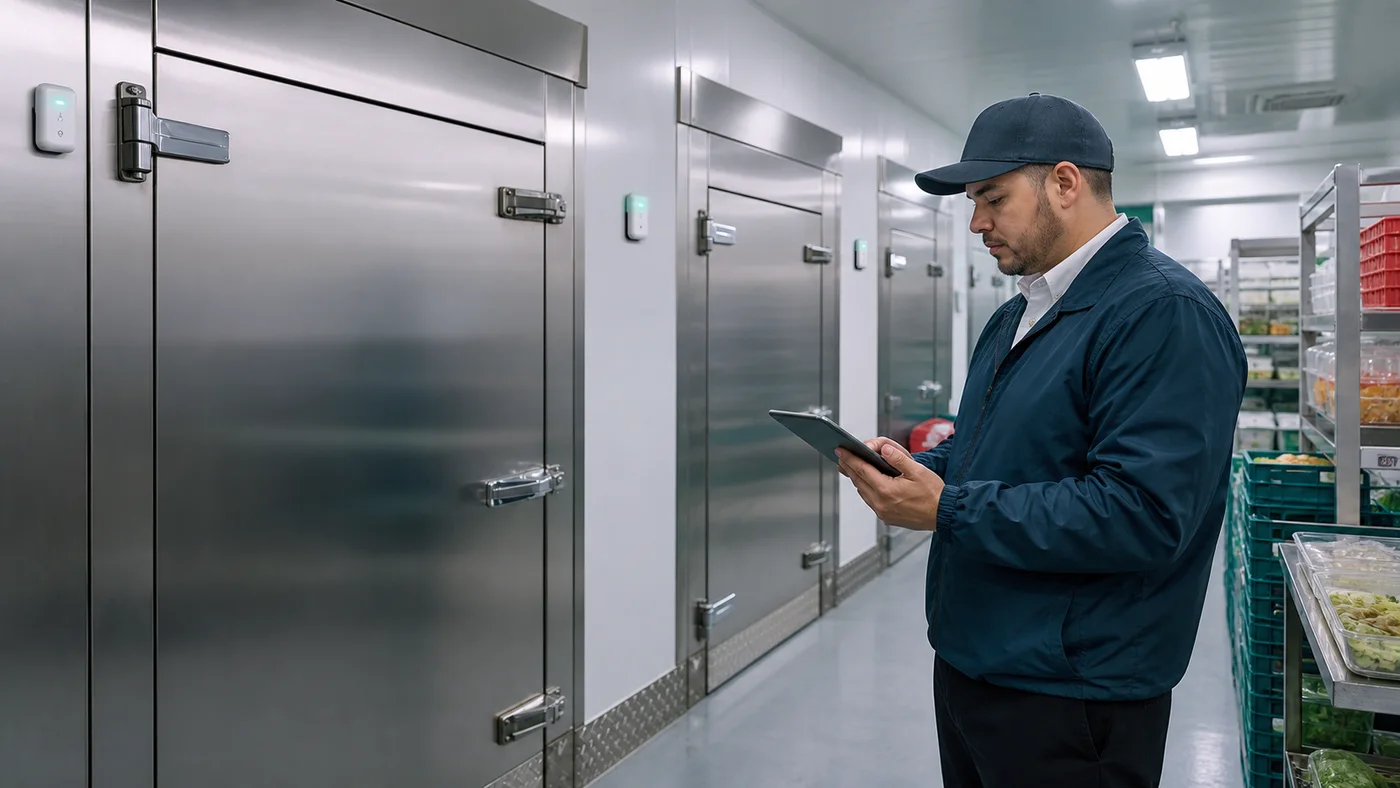
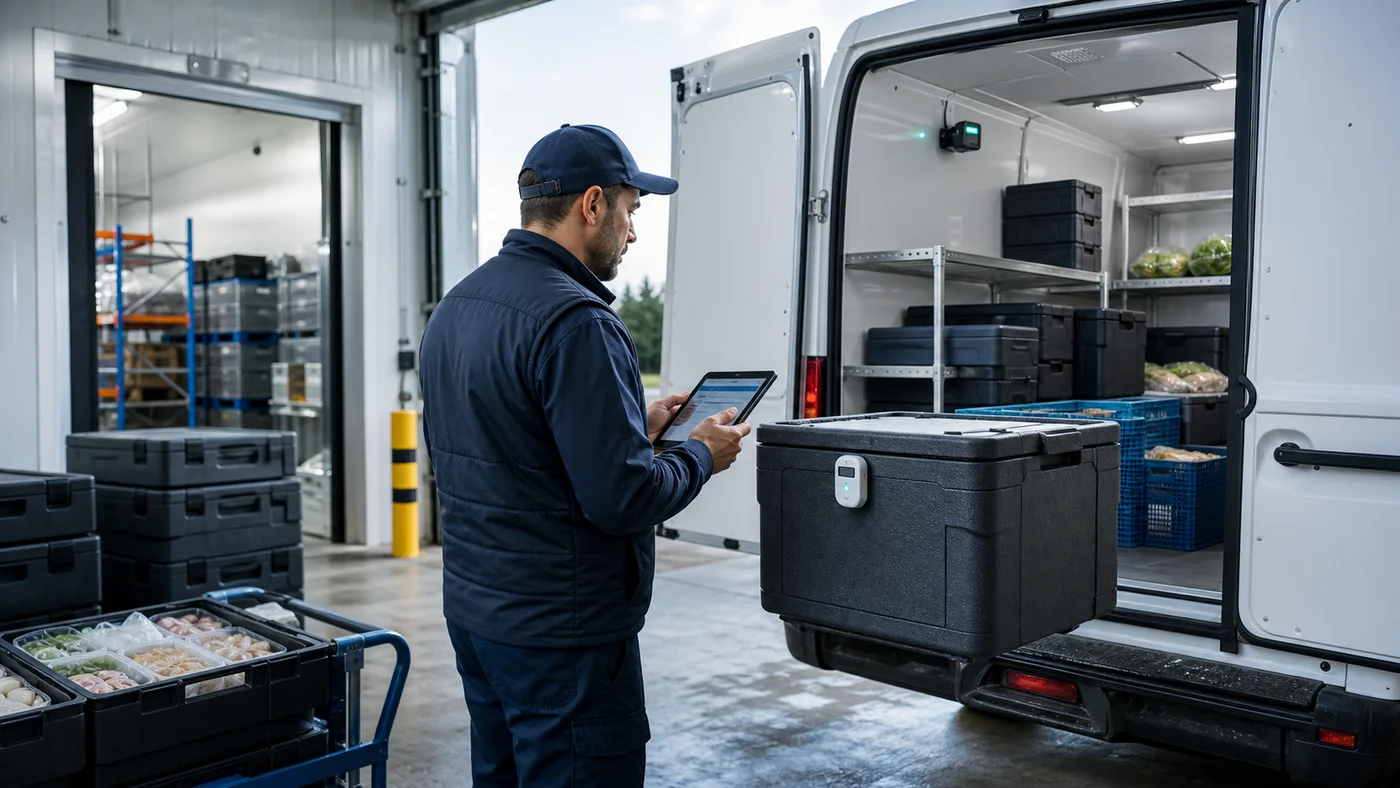
Fixed network infrastructure can receive compatible sensor data inside a covered facility. During transportation, a cellular gateway can travel with the vehicle or load and relay available readings beyond fixed coverage. Cellular data depends on carrier service, route coverage, power, installation, and the selected gateway configuration.
- Plan for temporary coverage gaps and define how stored readings synchronize when connectivity returns.
- Treat location as a separate capability: route or position context is available only when supported by a location-enabled gateway and service configuration.
- Avoid promising uninterrupted data or location on every route; validate performance in the intended operating environment.
Use Handoffs and Dwell as Operational Context
Timestamped zone changes, departure and arrival events, and dwell in configured areas can help teams identify whether an exception began in storage, staging, transportation, or receipt. Connect those events to the same shipment or container identity used for condition history.
- Review staging duration before loading and after unloading.
- Compare condition events with doors, stops, transfers, and known workflow milestones when those inputs are available.
- Use the history to guide an investigation; it does not by itself establish complete chain of custody.
Design Alerts Around the Response
Define thresholds, persistence rules, recipients, acknowledgement, and escalation according to the product, route, equipment, procedure, and applicable requirement. Dispatch, the driver, the receiving team, and quality personnel may need different notifications.
- State what the first responder should verify and when an approved product-temperature check is required.
- Record equipment checks, product checks, corrective action, and disposition under the organization’s procedure.
- Tune notifications during the pilot so routine door activity does not obscure sustained or important exceptions.
Pilot a Representative Lane
Test representative vehicles, packaging, loads, shifts, handoffs, and route conditions before broader rollout. Validate sensor placement, gateway power, cellular availability, delayed synchronization, notification timing, battery status, and user response. Useful measures include usable-history coverage, unresolved data gaps, acknowledgement time, staging dwell, exception follow-up, and manual-check effort. The FDA Sanitary Transportation rule has defined scope and exemptions; determine which federal, state, local, contractual, and customer requirements apply to the operation.
Condition history across staging, transit, and delivery provides broader context for investigating an exception than a single reading at departure or arrival.
Refrigerated-delivery monitoring is strongest when condition data stays connected to the relevant shipment, container, route, and handoff. SNAPTAG can tailor facility and cellular connectivity around the selected workflow, while the operator remains responsible for food-safety controls, required product checks, and disposition decisions.
Sources & Further Reading
Authoritative references used to frame this guide. Confirm the requirements that apply to your operation and jurisdiction.
- FDA Highlights Best Practices on Food Safety for Online Delivery ServicesU.S. Food and Drug Administration
- FSMA Final Rule on Sanitary Transportation of Human and Animal FoodU.S. Food and Drug Administration
- Small Entity Compliance Guide: Sanitary Transportation of Human and Animal FoodU.S. Food and Drug Administration
- Food ThermometersUSDA Food Safety and Inspection Service
Apply This Guide to Your Operation
Discuss the environment, workflow, conditions, and success criteria you need to validate.
Discuss In-Transit MonitoringExplore In-Transit Monitoring