
Monitoring Temperature-Sensitive Materials Across Storage, Production, and Transit
Laboratory reagents, diagnostic materials, pharmaceutical ingredients, adhesives, coatings, resins, composites, biological samples, and other designated materials can have different environmental limits. A credible monitoring workflow begins with the requirement established for that specific material, then connects measurements to its identity, location, process stage, and responsible team.
Establish the Governing Requirement First
Use the manufacturer label or technical documentation, Safety Data Sheet when applicable, validated process, quality specification, customer requirement, or governing procedure to define acceptable conditions. Do not infer a range from a similar material or apply one threshold to an entire category.
- Record the approved temperature range and any qualified humidity requirement.
- Document the permitted duration outside the target condition, if defined.
- Include light, vibration, orientation, or incompatibility considerations when relevant.
- Identify the responsible quality or operational owner and source document.
Map the Material Journey and Handoffs
Document where the material is received, stored, staged, issued to production, held as work in process, returned, and transported. Risk often appears during handoffs or dwell outside controlled storage rather than only inside the warehouse.
- Include receiving and quarantine.
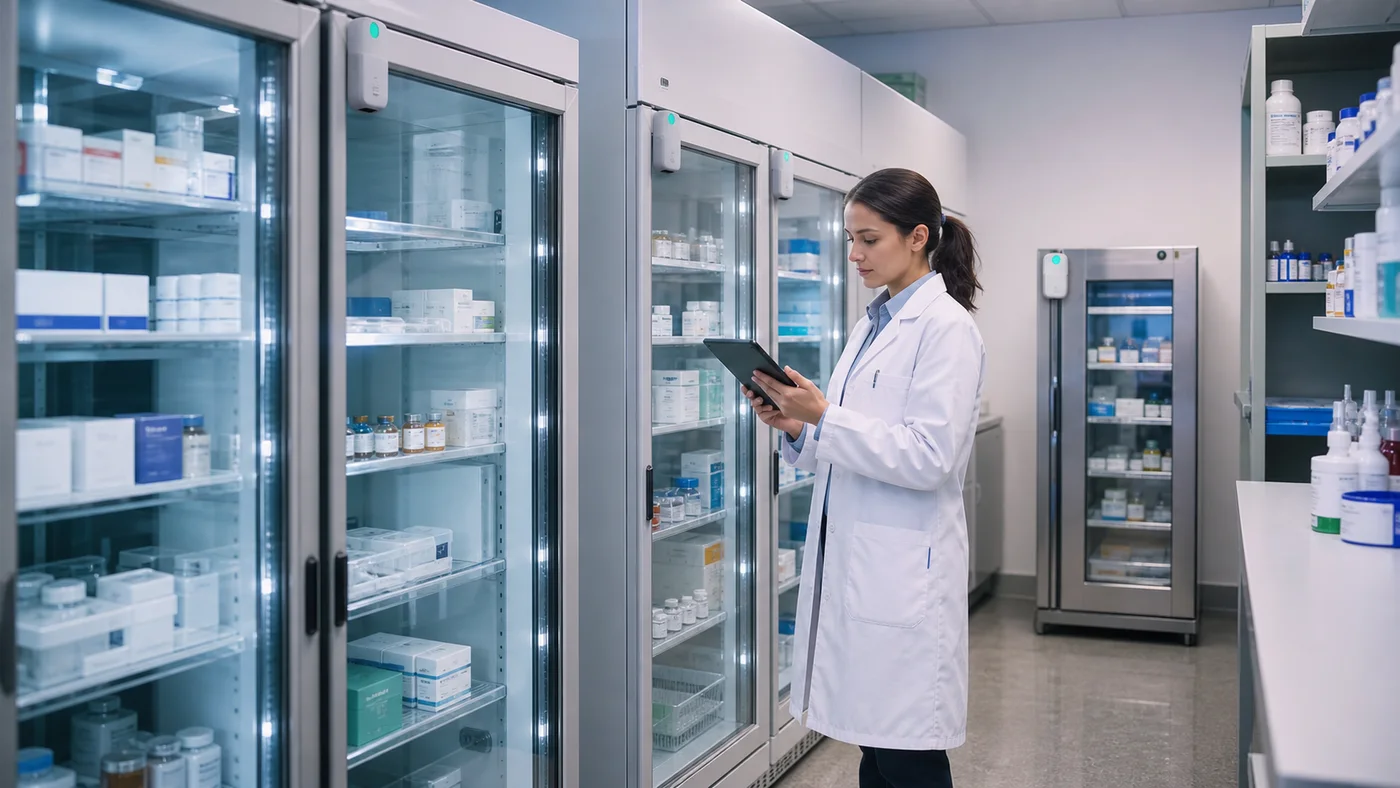
- Map cold rooms, cabinets, refrigerators, freezers, and controlled warehouses.
- Review staging, dispensing, preparation, and production areas.
- Include internal moves, external transportation, returns, and final disposition.
Connect Condition Data to Material Identity
A temperature reading has more value when teams know which material, container, batch, tote, or location it represents. Assign a digital identity at the level needed by the workflow and preserve its relationship to movement and condition events.
- Define whether monitoring follows a room, equipment unit, container, asset, or individual material.
- Record relevant receiving, staging, and shipment handoffs.
- Separate environmental readings from surface or internal material temperature.
- Include humidity only when the specification and selected sensor support it.
Choose Sensing and Connectivity for Each Stage
Fixed infrastructure can support controlled facilities, while cellular connectivity can extend compatible monitoring during transportation. Sensor range, accuracy, response, placement, battery, enclosure, logging interval, communication coverage, and acceptable data gaps should be validated in the real workflow.
- Match the measurement method to the decision being made.
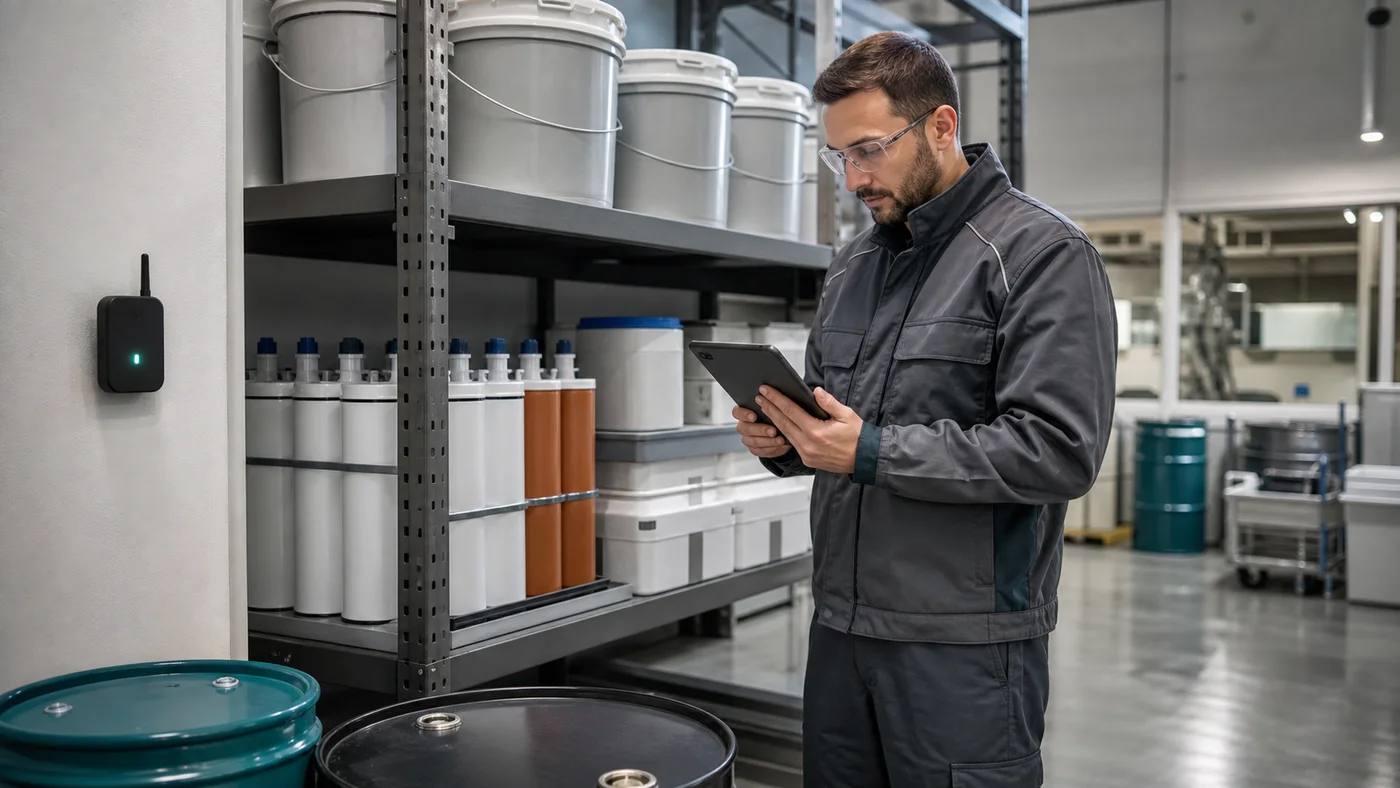
- Verify sensor placement around shelving, packaging, metal, liquids, and machinery.
- Test facility and in-transit connectivity where applicable.
- Define how buffered or offline readings are recovered and reviewed.
Turn Excursions into an Owned Workflow
A threshold alone does not determine material impact. Define event duration, alert delay, recipients, escalation, containment steps, and required documentation. Teams should be able to connect an event to its location, material context, and recorded response.
- Configure immediate and sustained-condition event rules.
- Assign the alert owner, backup owner, and acknowledgement expectation.
- Follow hold, quarantine, or investigation steps defined by procedure.
- Preserve notes, attachments, exports, and retained event history.
Keep Disposition with the Responsible Quality Team
Monitoring data can identify exposure and support an investigation, but it does not independently determine whether material remains suitable for use. The responsible quality function should evaluate the event using the applicable specification, stability information, process requirements, manufacturer guidance, and documented procedure.
- Measure data completeness and useful event detection during the pilot.
- Review nuisance alerts and missed operational context.
- Test response time and handoff ownership.
- Approve rollout criteria with operations and quality stakeholders.
The material specification—not the sensor—defines the monitoring program. The system should preserve useful context from storage through production and transit.
The strongest monitoring program follows the material through the real operation without replacing its governing specification. Connecting identity, location, condition events, and response history can help teams detect problems earlier and investigate them with better evidence. SNAPTAG can tailor sensing, connectivity, and workflow configuration to the application while the responsible organization retains control of acceptance and disposition decisions.
Sources & Further Reading
Authoritative references used to frame this guide. Confirm the requirements that apply to your operation and jurisdiction.
- Appendix D to §1910.1200—Safety Data SheetsOccupational Safety and Health Administration
- 〈1079.3〉 Monitoring Devices—Time, Temperature, and HumidityUnited States Pharmacopeia
- Model Guidance for the Storage and Transport of Time- and Temperature-Sensitive Pharmaceutical ProductsWorld Health Organization
- Recommended Calibration IntervalNational Institute of Standards and Technology
Apply This Guide to Your Operation
Discuss the environment, workflow, conditions, and success criteria you need to validate.
Discuss Your Monitoring ApplicationExplore Temperature Monitoring